
This March, with summer reading program plans dancing in my head, I decided to try something new: why not have a poster and bookmark contest to promote summer reading! The idea was not entirely my own. I heard that my friends at Platteville Public Library had hosted a bookmark contest the year before and that it had been incredibly inexpensive to run. (Thank you, Platteville Public Library!). Our city is just over 5,000 people, and our service population encompasses another 10,000 who live in the rural areas around our city. I am always looking for ways to increase our community’s sense of ownership in our public library, and few activities promote as much ownership as seeing your creative work displayed as a poster, or given away as a bookmark! 
In the past, our library purchased bookmarks and posters from professional library supply sources to promote the summer reading program. This year, we decided to use this opportunity to showcase local artistic talent by printing designs created by local artists. In late March, I created a registration form with the rules for the contest, and made this form available at our circulation desks, on Facebook, and on our website. We had four categories: K-3rd grade, 4-8th grade, 9-12 grade, and adult.
 I was worried that we would receive almost no entries. Anytime our library does something new, it takes time for our community to know about it, and begin participating. However, two of our area art teachers saw that registration form, and gave it to their students as an optional assignment. With these teacher’s partnerships, our library received over 40 entries. After the entries came in, we taped the artwork to black construction paper, and using sticky tack, we attached them to a wall and placed a number by each entry.
I also wanted our community to feel ownership, even if they had not submitted artwork. So, I made a simple ballot and asked our circulation librarian to give the ballot to each patron when they came to check out their items. I also took pictures of all the entries and uploaded the photos to Facebook so patrons could vote via that medium.
 After a month I simply counted up the votes to find out which designs would be our winner. I contacted a local print company in our city, and they were able to print 500 color bookmarks (2.25 inches by 7 inches) and 14 posters for about $100.
The contest was a huge success. We were able to submit the contest results to the local paper, along with an invitation to the community to pick up a bookmark to take home while signing up for our upcoming summer reading program. Great publicity for everyone!
This was a lot of fun, and a wonderful way to bring our community together around the goal of promoting summer reading. The bookmarks are now out at our circulation desks, and the posters decorate walls that had just a little too much white space. Our patrons have begun to notice them, and realize that they were designed by local artists. We will certainly be doing it again in the future!
I think the largest takeaway for me is to look for an opportunity, any opportunity, to allow your community to find a way to leave their mark in their library. Doing so bring people from outside the library walls in, and our library grows and strengthens because of it.
Here is the registration form we used (I am so sorry. I was not able to find the editable word document on my computer):

Here is the ballot that we used: Poster and Bookmark Contest Ballot
And, here are a few more posters:


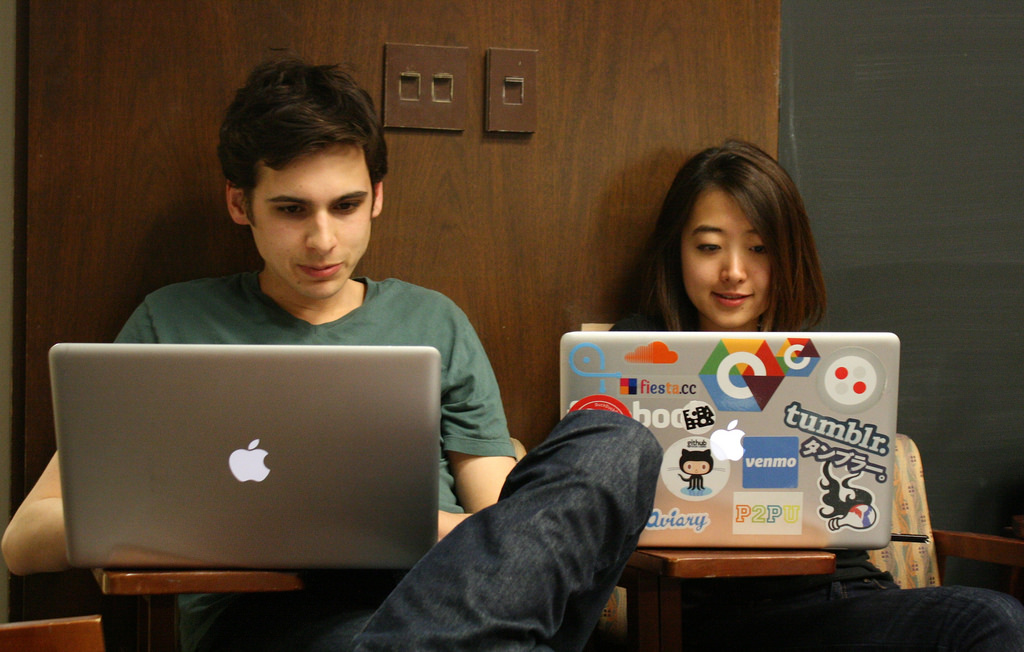
 For my new friends I met at the Fitchburg Public Library on Friday (and everywhere else), here is a link to my post, “Murder at the Library” scavenger-hunt style program for tweens!
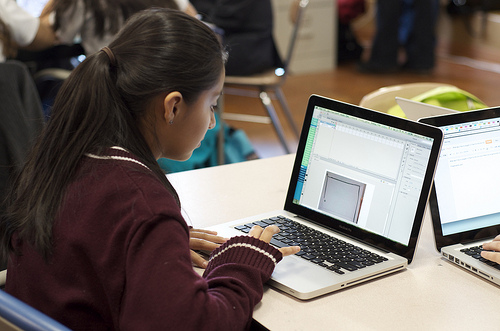

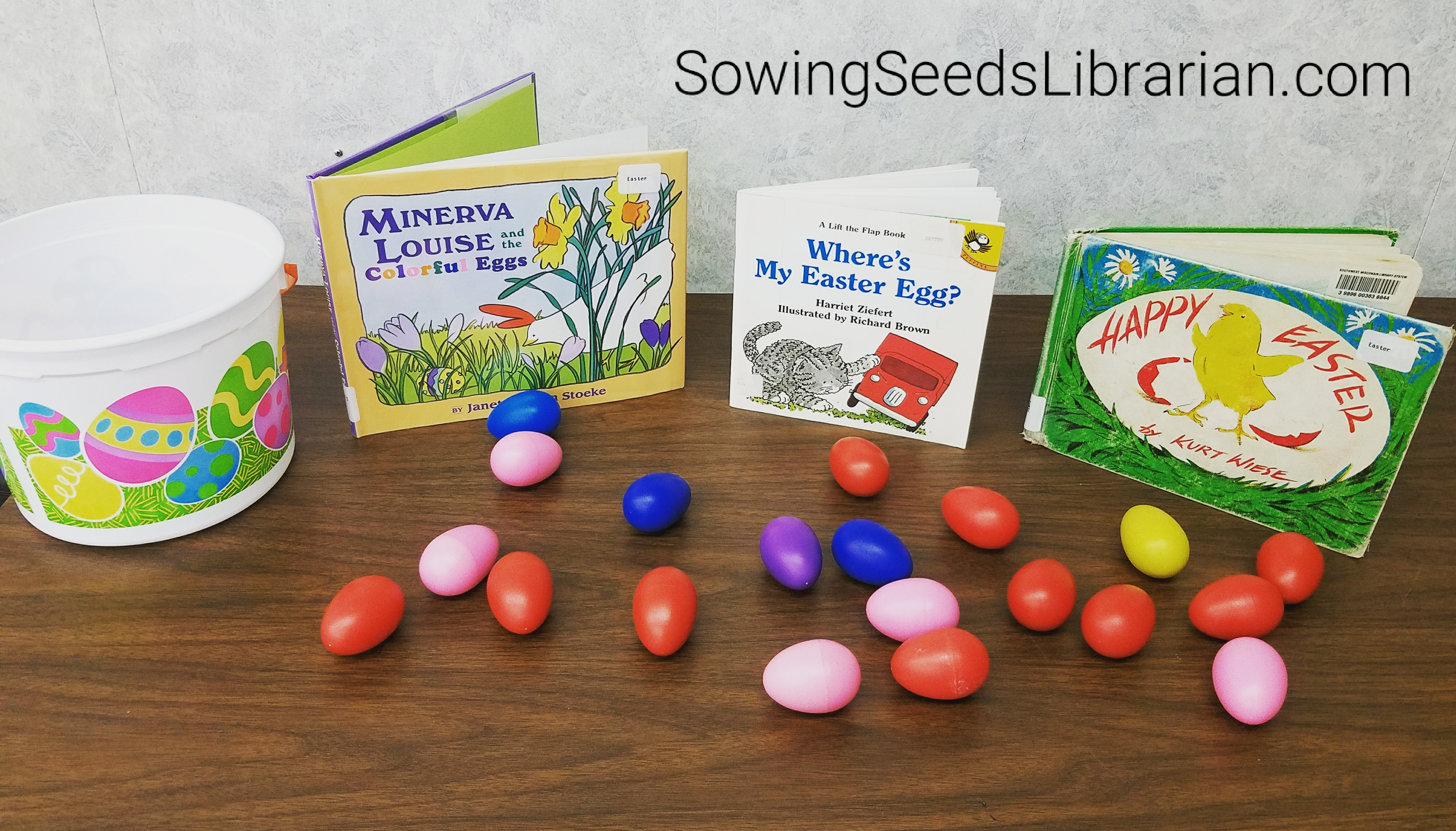

 Today we get to work with puzzles! You only get 20 planks, and they all look the same. How many objects can you create with those 20 planks? A lot. How much fun will you have? Again…a lot!
 Saint Patrick’s Day is one time in the year when everyone can be Irish! Ask your community if they would like to see Irish dancers, and they may just come out of the woodwork. Add in a fun craft project and some lively music, and you have a program that will be enjoyed by all ages!


 For the past two months, we have been experimenting with picture book displays above our picture book shelves. I had been using this space for new books, but after a large weeding project, I realized how many wonderful books we already own! These books deserve some face time too so that parents and kids can discover them. In March, we celebrated National Puppy Day (March 23rd) all month long by displaying our puppy and dog books all throughout March. We began with 80 puppy and dog books. Because our check out is three weeks, we do not code these books any differently than regular books, because by the time the display books are returned, we are prepping for our next display. So, when they are returned, we just shelve them back into the regular collection. When I took the Puppy display down yesterday, we had only 30 that had not been checked out. For April, I asked one of our library interns to go through the picture book collection and pull anything that was related to books, reading, or libraries. I added all these books to a list in our library software so that next year we can refer to the list and pull the books without going through every book in the picture book collection to find them again.
 Just how hard is it to build a bridge? Well, I think our library kids can best answer that question. What I do know is that planning a Kids’ STEM Workshop around bridge building using Legos and Engino toys to help reinforce the B.A.T.S. design that all bridges utilize was super easy, and super fun!


 Flannel board:
  We live in a binary world. Our computers, music, books, magazines, almost every form of media is digital and it all runs on the binary code. But, it is surprising how little many of us understand about the code that influences so much of our lives. For Teen Tech Week in March 2017, I wanted to do a program for tweens on coding and showing them the binary system. But, is binary code easy enough for kids to understand and write? Can we do a coding program without a computer? As we found out, the answers are yes, and yes!
 With spring in the air, this was a fun way for one of our library interns to beautify the wall above our picture book collection. The butterflies were made with our die cut machine. Our intern cut out each die cut butterfly in two different colors of paper, and then hot glued the butterflies together to make them 3-D.